It’s the end of analog. The Canadian Radio and Television Commission (CRTC) has mandated that the official decommission date of existing 911 services is 2027, to be replaced with digital Internet Protocol (IP). Next Generation 911 is a many-headed hydra.
Read this on Druthers, a shorter version,
The public story involves increased speed, more data sources like ‘real-time transfer’ of texting and video, faster response times and better outcomes. “Accurate caller location data can make a life-saving difference during emergencies. If a caller cannot speak or does not know their exact location, emergency responders still need a reliable way to find them. Advanced location technologies allow dispatchers to quickly determine where help is needed.”
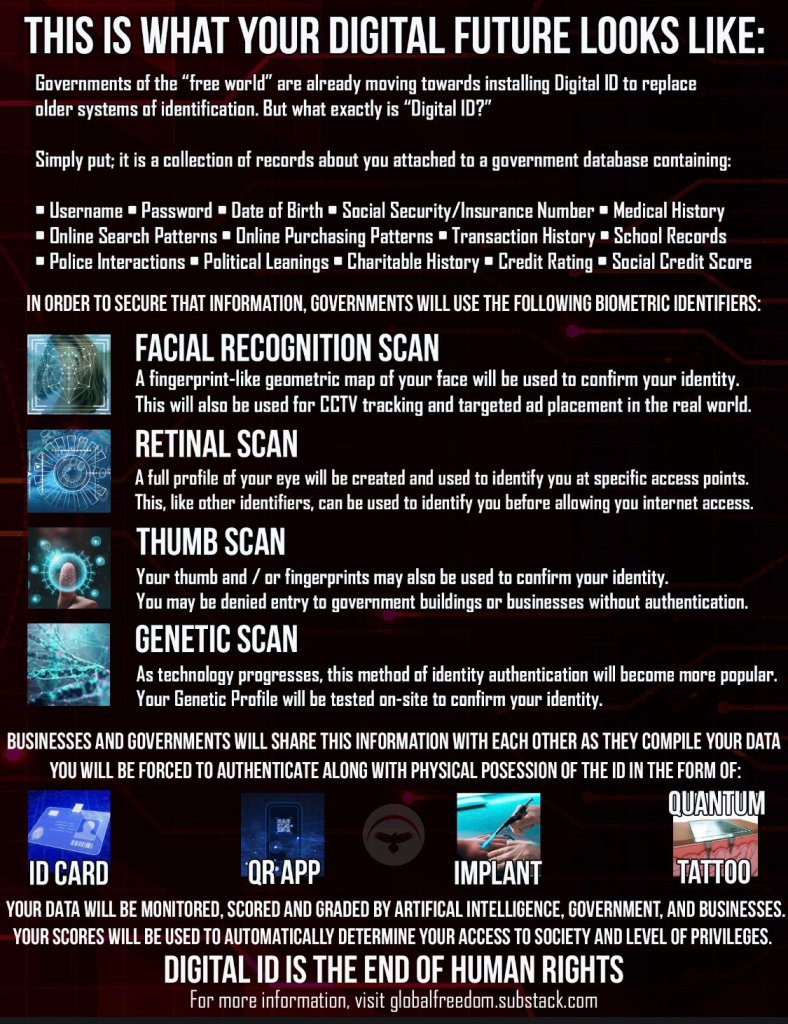
The untold story is about NG 911 syncing up with the omnipresent juggernaut coming at us—global militarization, digital ID, facial recognition technology, the Internet of Things, ‘free’ speech being monitored for proactive policing, China-style social credit scoring, centralization and commodification of health records, etc. NG 911 is where tyranny meets granny lying on the floor in dire need of medical attention.
Here are the Coles notes.
Military and defense departments—what the CRTC calls the “Coalition of the Willing”—are heavily represented in NG 911. Carbyne, for instance, is an Israeli/American defense contractor busy buying up American emergency call centers. Carbyne “develops advanced emergency communications solutions, focuses on providing real-time video, location and data transmission to enhance emergency response systems worldwide.”
Public Safety Canada (PSC) and the US Department of Homeland Security (DHS) are in collaborative partnership. They’ve “worked with stakeholders to identify priorities for joint work to improve responder communications interoperability”—in other words, the seamless flow of data between and among numerous entities. Stakeholders refers to special interest groups—the mobile carriers like Bell, Rogers, Telus, and many others. Less obvious stakeholders, the ones we seldom hear about, are fintech entrepreneurs creating new revenue streams, new data-related services, selling data packages to third parties, and making information subscription-based.
The data gulag/data gold rush is in full swing. One headline reads, “Next Generation 911 Opportunity to Exceed $1.5 Billion in Revenues by 2030 as Public Safety Transforms into a Data-Driven, AI-Enabled Ecosystem.” A fintech blog reports, “NG 911 utilizes more types of data, including from smart devices and data-rich information from a variety of sources such as vehicle sensors, wearable medical devices, smart home alarms, building sensors and monitoring systems.”
The CRTC’s NG 911 Commission declares Canada is open for business: “NG 9-1-1 networks should be accessible to all types of entities, to the maximum extent possible..” IBM predicts rapid, outstanding growth: “In 2023, the global data monetization market was valued at USD 3.5 billion, and experts project it to reach USD 14.4 billion by 2032, demonstrating a compound annual growth rate of 16.6% from 2024 to 2032. (4) No wonder the “experts” keep predicting disasters; doom merchants are in dire need of dire emergencies—real, imagined, accidental, or contrived.
The CRTC reports that Canada is partnered with the Windermere Group, invisible stakeholders who use a global wealth management company located in Nassau, Bahamas, that tax haven for those who are not fond of taxes, regulations or publicity. Online information about the group is scant, member identities are absent. The group takes its name from Windermere Island, which was once owned by an English Lord and now belongs to the elite’s elite who covet its pink sand beaches, not to mention the privacy and gated security—only property owners and invited guests allowed.
‘Stakeholders’ also refers to public/private partnerships (PPPs). CRTC describes it thus: “high-value data services can be co-developed and financed through shared risk and return models..” In plain speak, the ‘private’ refers to corporations. The government bestows tax rebates, subsidies and privileges upon a corporation (their buddies); the corporation is given the land to build massive water-guzzling, energy-sucking AI data centres. Concomitantly, the corporation ‘donates’ to something like daycares or public parks and the McMedia they own advertises their ‘philanthropy’. Corporate law shields corporations from fiscal audits, so taxpayer money disappears and cost overruns are the norm. The ‘public’ part of the ‘partnership’ is negligible.
Adroit messaging sells the macro. “Today, large-scale emergencies—from pandemics to natural disasters—demand faster, highly coordinated, and more precise responses. With traditional 911 systems, however, public safety infrastructures are often outdated, overwhelmed, and lack the ability to handle modern disaster scenarios with the efficiency needed.” (2) “As public safety becomes more data-intensive, NG 911 will be central to improving emergency response speed, accuracy, and situational awareness, with growth favoring providers that simplify deployments, ensure secure interoperability, and convert expanding data sources into actionable intelligence.” (3)
The public sales pitch takes many forms. Despite most people knowing almost nothing about NG 911, corporate marketing is inventing justifications, claiming it’s “what the people demand.” Natural Resources Canada (NRC) recommends “demonstration projects in provinces or regions without existing SDI [Serial Digital Interface] infrastructure to show benefits and gain traction.” Sound familiar? Remember COVID messaging about “gaining traction” for mRNA? NRC advises corporations to “bundle SDI funding into initiatives with strong public resonance, such as climate monitoring, emergency services, and wildfire detection.” The ever-obedient propagandists at CBC Radio One got the memo; in a recent broadcast, their “expert” predicted a “devastating fire season ahead” and the reporter chimed in, “The government is currently updating emergency services”.
Enter the World Health Organization (WHO). A revolutionized emergencies response system like NG 911 perfectly dovetails with the Pandemic Treaty agenda, which Canada signed onto during Justin Trudeau’s tenure. WHO expert James Rogulski reports that the treaty’s clandestine motivation is to “secure profits from pathogens with pandemic potential”. This ominous phrase means normalization of biolabs, gain-of-function research and biowarfare. When the WHO decrees “an emergency of international concern,” (and you know they’re going to) signatory nations are legally bound to relinquish some rights and sovereignty. Canada’s “health management” has had to upgrade “pandemic readiness”. New information networks hook deeply into local communities and funnel data up the chain of command to WHO authorities. They’re called Core Capacities: prevention, surveillance, reporting, notification, verification, preparedness, response, and collaboration. (5) (Annex 1, 1a)
Integral to NG 911 are GPS and Geographic Information Systems (GIS). GIS captures, stores, processes, and visualizes geographic information. A booster blog writes, “GIS is expected to become even more essential in the NG 9-1-1 system as technology advances.” (6) A GIS map contains detailed topography, above-ground and sub-ground infrastructures, and millions of lights like fireflies on a dark night, each light representing every single cell phone signal. It amounts to instantaneous location awareness and assessment. Currently unavailable and eagerly anticipated, indoor location tracking—soon they’ll be able to look through walls.
All this new technology has enabled predictive policing (predpol) which is the crystal balling of potential crime. Predpol “uses AI and algorithms to analyze historical data, forecasting when and where crimes may occur, or identifying individuals likely to be involved in criminal activity.” (7) Note the highly subjective and speculative wording: may, likely. Police agencies claim predpol “helps identify areas at high risk of emergencies and enable proactive measures to be taken.” But predpol has been proven to be highly inaccurate and American critics like Rachel Levinson-Waldman, senior counsel at the Brennan Center for Justice, report that “…community organizations are not actively pushing for predictive policing as a preferred way to serve their neighborhood or community.”
Despite the drawbacks, it’s being used in Canada. The justification of “protective measures” can easily morph into the arbitrary incarceration of those people a brutal regime wants to silence and disappear, as investigative journalist Whitney Webb recently noted. “Algorithms target and scan social media for ‘early warning signs of violence’. Pre-crime creeps closer and closer to our private lives,” she said, “People could be incarcerated in times of political upheaval. Extreme surveillance is at hand. They will be able to throw people in jail.”
CRTC NG 911 documents identify “privacy issues” only once; it was the last item on a short list and received no attention. There are currently no laws on the books protecting the public from all the risks we’ll be subjected to in this age of big data; we don’t have any digital rights.
Natural Resources Canada identified a few problems—affecting fintech entrepreneurs. “Open data policies exist but are inconsistent and unenforced across jurisdictions.” In other words, investors beware, and open data policies are preferable because then all data is exploitable. “Weak legal mandates” is another problem—or a boon to some lawyers. “Inflexible licensing agreements” is another problem, meaning investors could be bound to rigid terms, unable to adapt to market changes or modify how intellectual property is used. “Few agreements address long-term data stewardship” across the many jurisdictions involved. A great deal of safety is being sacrificed to a wild wild west data gold rush.
And this curious item: NRC identifies the problem of Indigenous data sovereignty being overlooked; “existing policy environment does not adequately account for OCAP® principles [Ownership, Control, Access, and Possession over data collection processes, established by First Nations in 1998] or respect Indigenous communities’ right to govern their data.” Many questions arise, including: Indigenous data sovereignty is a thing? Why don’t the rest of us have those rights?
Cyber espionage will exploit all weaknesses. In a March press conference, Toronto Police Service informed the public they caught three Chinese operatives [police were only permitted to say “three males with names sounding like those from mainland China”] driving up and down the streets of Markham, Ontario, in vehicles that were carrying invasive technology—“military-grade hi-tech blaster with a bunch of circuits, a router, and antennas.” They had the ability to connect to nearby phones and send fraudulent text messages that were professionally engineered, legitimate-looking, and designed to capture personal information, banking credentials and passwords. It’s called “smishing”. By the time police discovered the operation, they’d been at it for months and had gathered at least 13 million contacts. “When devices are diverted away from legitimate networks,” police said, “it interferes with a person’s ability to connect to emergency services.”
Elsewhere in Canada, disturbing trends in emergency communications recently prompted ten small-town mayors in Southern BC to join hands and protest the lack of transparency in E-Comms and the off-loading of costs/levvies onto their limited tax bases. Pender Island mayor, Philip Perras, reported that an independent review of E-Comm 911 completed in September, 2025, “confirmed what municipalities have been saying for years: the system lacked clear governance, financial controls, and meaningful oversight. Accountability effectively stopped nowhere, with unclear authority, unpredictable levy increases and no contingency fund for emergencies — the very business they are in.”
Meanwhile, boots-on-the-ground emergency service providers in our communities are busy doing what they always do. Police are trying to keeping global drug cartels from turning their communities into killing fields. Fire Services are replacing old hydrants and updating water mains; they’re training and retaining volunteers. Ambulance personnel are attending fentanyl overdoses and rushing people to the hospital emergency wards that are open. Search and Rescue are promoting outdoor safety awareness and honing skillsets in dangerous terrain.
Citations:
(1) CRTC https://crtc.gc.ca/eng/phone/911/gen.htm
(2) Revolutionizing disaster management blog https://nga911.com/blogs/post/how-ng911-revolutionizing-disaster-management-and-large-scale-emergencies
(3) https://en.wikipedia.org/wiki/Next_Generation_911
(4) https://www.ibm.com/think/insights/data-monetization-strategy
(5) WHO Pandemic Treaty https://apps.who.int/gb/ebwha/pdf_files/WHA77/A77_ACONF14-en.pdf
(6) https://nga911.com/blogs/post/ng911-gis-role-geographic-information-systems-next-generation-911
(7) https://www.brennancenter.org/our-work/research-reports/predictive-policing-explained
GIS map https://www.esri.com/en-us/home


 the Lillooet Gazette