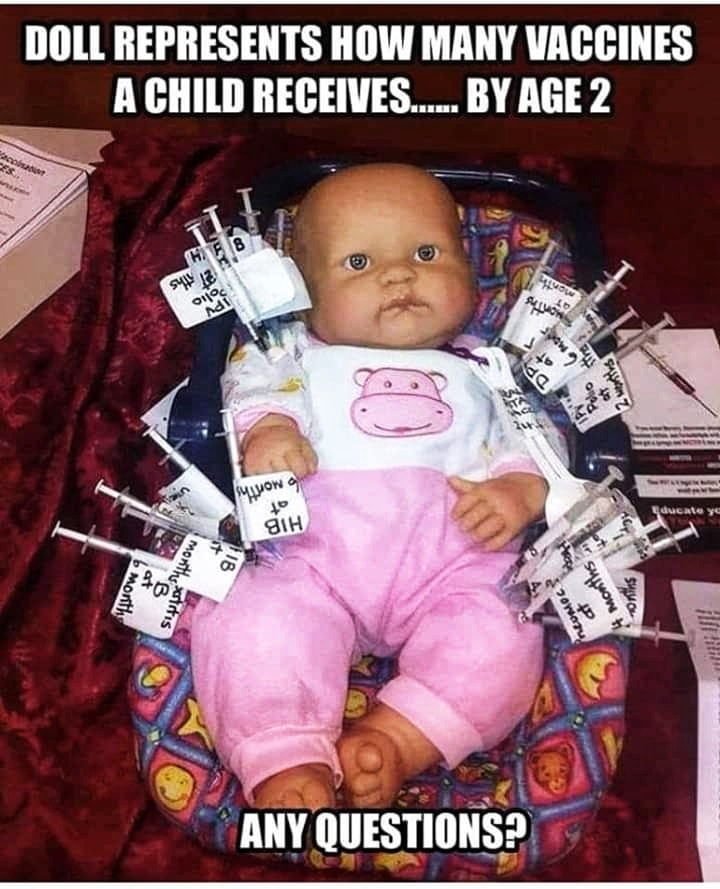
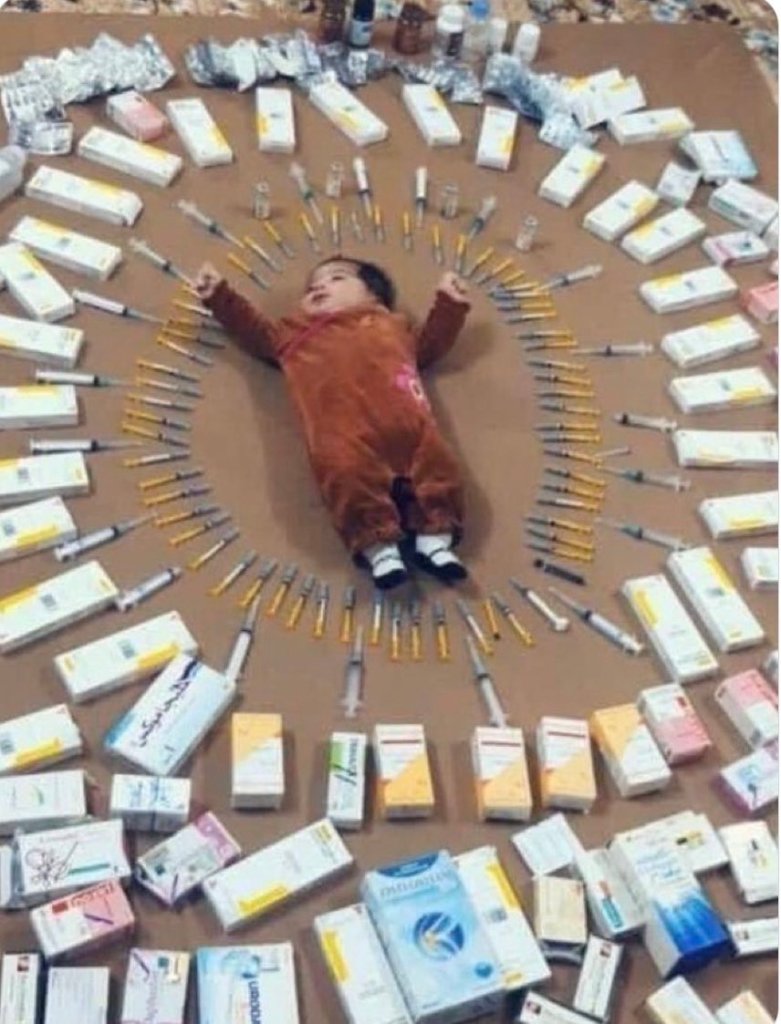
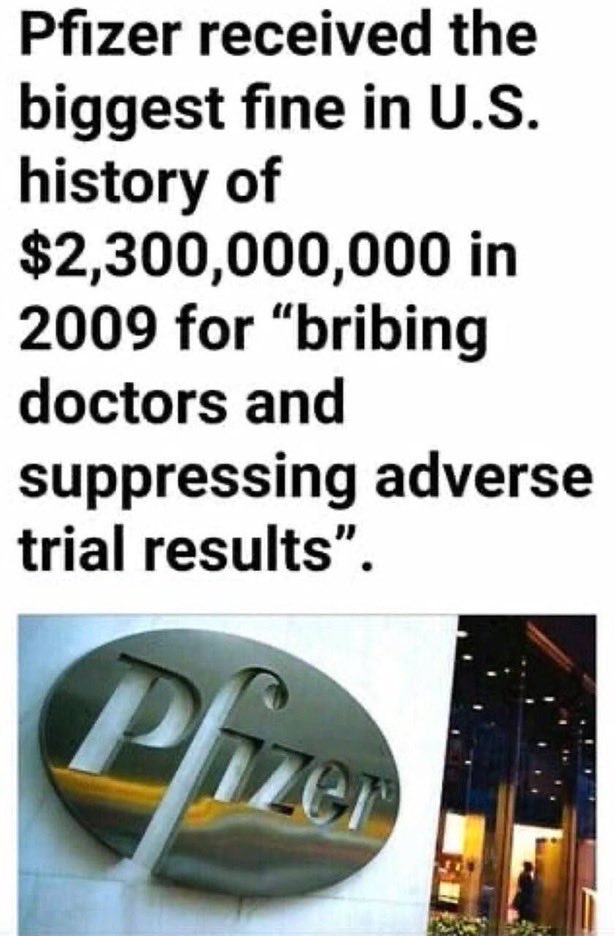
[It’s rare to see a testimonial like this. Fair warning: it can be painful to read. But it’s an important document from the early 1980s before big pharma convinced President Reagan in 1986 to give them legal immunity for their products: they were being successfully sued by heart-broken parents. We should all know, without a doubt, that having legal immunity paved the way for the vaccine industrial complex to become riddled with scientific fraud, greed and sociopathic disregard for public health and safety over the decades. When this testimonial was written, a baby’s first shot was at two months of age; those two months gave mothers the opportunity to see their baby’s neurological development, to observe their baby’s natural behaviours and body functions. Shortly after pharma was given legal immunity, they made it mandatory that a newborn was vaccinated on day one of life.]
“It was January 12, 1983, and I was getting ready to take my two-month-old son, Richie, to the pediatrician for his checkup,” Janet recalled. “My sister-in-law called and asked me if I had watched the Phil Donahue Show on the side effects of vaccines that morning. I told her I hadn’t had time to watch it, but that I’d call her later to learn more.”
In two months, Richie’s weight had climbed to eleven pounds, nine ounces from his six-pound, six-ounce birth weight. He frequently had loose stools the first eight days after he came home from the hospital. His formula was changed to plain Simulac without iron and the loose stools stopped. He was a good eater and very even-tempered, despite a nagging problem with gas that had prompted Janet’s pediatrician to put him on the antiflatulent Mylicon. An alert and active baby, he was awake more than most newborns during the day and wanted to eat several times a night.
“Well, I can’t find anything wrong with this baby,” Janet’s pediatrician said, after checking Richie over. He proceeded to give Richie is first DPT shot and oral polio vaccine and told Janet to “give him half a baby aspirin or children’s Tylenol in four hours.”
“I knew the DPT shots produced a lot of discomfort,” Janet admitted, “because my five-year-old son, Ryan, had terrible problems with all this DPT shots. After Ryan’s first DPT shot, his leg got red and hot and swollen from the hip to the knee. It was so swollen, I was worried about the circulation in his leg. His temperature always zoomed to over 103 degrees and he screamed uncontrollably. Nothing could stop his screaming. He also had diarrhea and vomiting. All this lasted for about forty-eight hours after each shot. When I phoned my pediatrician to report on Ryan’s condition and asked what I should do, he always told me it was a normal reaction to the DPT shot and not to worry.”
A licensed practical nurse, Janet works on the orthopedic-neurology floor of a community hospital. While she has received an education in nursing and has practiced for five years, she says she was never informed about adverse reactions or contraindications to vaccines in nursing school.
“We were never taught about reactions to vaccines, and I had asked my friends who are RN’s if they were taught about vaccine reactions or which children should not receive the vaccines, and they all said no. Some of them have advanced degrees. From what I know now about the pertussis vaccine, my pediatrician should have reviewed our family history, which includes epilepsy, deafness, and blindness caused by unexplained neurologic damage, Bell’s Palsy, rheumatic heart disease, diabetes, and allergies including milk intolerance, and migraine headaches before he gave either of my sons the pertussis vaccine. He never discussed with me.”
Janet trusted her pediatrician when he said that Ryan’s violent reactions to his DPT shots were normal. She had no reason to suspect they were not.
Janet remembers taking Richie home, hoping his reaction to his first DPT shot would not be as bad as his older brother’s had been. By that evening, however, Richie’s hip had started to swell just like Ryan’s had after his shots. But Richie’s hip then turned from red to dark purple, and later the purple started to spread out from the site of the injection in round patches. Richie did not have a fever and drank from his bottle, but he cried if Janet touched his leg.
“He woke up about one-thirty in the middle of the night crying,” Janet said. “After a couple of sucks on the bottle he went back to sleep until six that morning. When he woke up, he started screaming off and on. He sounded like a cat in pain. His scream was high and forceful and then he would fall asleep. I put a soft blanket underneath him because I figured his hip was bothering him.”
By seven-thirty in the morning, he was crying again. Janet picked him up and he was limp. His cry was weak now, and he seemed unable to hold his head up. “I fed him a little cereal, and he took a whole bottle of formula and fell back to sleep. I thought it was strange because he usually was awake at this time in the morning. But I put it down to the shot and didn’t worry.”
About eight-thirty, Janet was drinking coffee, and she heard Richie give out a tremendous explosion of gas into his diapers. “I knew he was having diarrhea, but I wondered why he didn’t wake up because he hated to have anything in his diapers. I woke him up and changed him. His diapers were full of light brownish diarrhea with a lot of mucus. He fell asleep again for about two hours and woke up crying. When I picked him up, he was completely soaked through two receiving blankets. I have never seen a baby soaked like that. The odor was musty and pungent, a smell I will never forget.”
Janet gave Richie a bath to wash him off. “He was limp and he just stared at me with dark eyes as if he was mad at me. I noticed his little hands were ice-cold from the wrists down. It was winter, and I thought his hands were cold from the bath I was giving him or maybe I had the heat turned too low.”
Janet got Richie dressed and put socks on his hands to keep them warm. She gave him eight ounces of warm water, which he drank more slowly than usual. In the afternoon, Janet changed three more diapers, all of them containing yellow diarrhea. In each diaper, however, the amount of diarrhea was less. Richie’s leg still seemed to hurt him, and his fingers twitched a little while he slept.
“I did not call the doctor,” Janet explained, “because Richie had the exact same symptoms as Ryan earlier had had with his shots—strange crying alternating with unusual amounts of sleeping, diarrhea, and a red, swollen leg. The only difference was that Richie slept more and did not have a fever, and I was thankful for that because I know a high fever can produce febrile convulsions. In fact, he was on the cool side, and I made sure I kept him dressed warmly after I noticed his hands were cold. The whole day I kept giving Richie his bottle. I just didn’t realize what was happening to him.”
At four o’clock that afternoon, Richie vomited a little. He had gagged on the nipple of the bottle, and so Janet spoon-fed him water to keep fluids in his body. “I tickled his lips with my finger, and he didn’t smile at me like he usually did. He just kept staring at me with dark eyes like he was mad at me.”
At eight o’clock that evening, Richie still did not have a fever and his hands were still cold. Janet’s husband, Anthony, changed another diaper with a small amount of diarrhea in it while Janet was at the drugstore buying Pedialyte for Richie. At ten forty-five, she woke her baby up and started to give him a bottle.
“He took two sucks. His eyes were open. All of a sudden he stopped sucking. I shook his shoulder, and called his name. He didn’t respond to me. I put my lips to his forehead, and he was ice cold and clammy. Then he started sighing. With each breath, he made a sighing sound.”
With Richie in her arms, Janet ran and told her husband there was something wrong with their baby. Anthony held Richie while Janet called her doctor’s answering service and explained to the pediatrician on call that Richie had had his first DPT shot the day before. She told him all the symptoms Richie had shown since then.
“I told him everything that had happened to Richie since he got his shot the day before,” Janet said. “He didn’t sound worried and agreed that it was probably a DPT reaction. While I was talking to him, Anthony came into the room and held Richie under the kitchen light, and I noticed Richie’s pupils were not responding to the light. I told the doctor that, too. He told me that if I wanted to, I could take him to the hospital and have him checked over. I said yes, I would, and asked him if he was going to meet us there. He said, no, it wasn’t necessary, that someone else would check Richie and call him back with the results.
“He didn’t tell me to call an ambulance and rush him to the nearest hospital. He just wasn’t that concerned about the symptoms I described,” Janet recalled. She hung up with a feeling of foreboding that she could not shake.
Anthony and Janet decided they had better get Richie to the hospital immediately. Anthony hurriedly dressed and left to warm up the car while Janet rushed into Ryan’s bedroom and woke him up. Then she ran into her bedroom and laid Richie on the bed so she could get dressed to go to the hospital. Five-year-old Ryan came into Janet’s bedroom and watched his baby brother, who was lying on the bed staring at the ceiling and sighing.
“I picked Richie up, and he stopped breathing. I screamed for Anthony and breathed into Richie’s mouth but there was no response. I ran down to the dining room and started to perform CPR (cardiopulmonary resuscitation) on him while Anthony called the ambulance. I kept doing CPR, and all of a sudden vomit started to fly out of his mouth. I turned him over and clapped him on the back to clear his breathing passages. Then I continued with the CPR. The ambulance came and the paramedics continued the CPR. I knew my baby was gone. I kept screaming he was dead. When he had stopped breathing in my arms, all of a sudden, the whole day came together like one big nightmare. He had been dying all day, and I didn’t even know it.”
Richie had died thirty-three hours after he received his first DPT shot. When the emergency-room doctor pronounced Richie dead, Janet told the nurses to call her pediatrician.
[Dear Reader, unfortunately one page is missing from this document. I downloaded it and must have made an error and when I tried to find it again on the Wayback Machine, I couldn’t, it wasn’t there. Was the document disappeared? In this current atmosphere of dire corruption and evil, perhaps so. In any case, here’s the rest of the testimony.]
…lungs and brain. Janet and Anthony then set up a meeting with the coroner to discuss the autopsy report.
When they entered the coroner’s office, a nurse handed Janet an article entitled “The Pathologist and the Sudden Infant Death Syndrome (SIDS)” and told her to read it. Janet refused. Then the coroner started reading out loud to her from the article. She interrupted him. “My son did not die a SIDS death,” she said. “Now let me tell you what happened in the thirty-three hours following Richie’s first DPT shot.” She told him, and he listened. He then wrote down on the death certificate, “death due to irreversible shock”. When Janet asked him what caused the shock, he said the best he could do was to write down that the shock was due to a “possible DPT reaction”.
Janet asked the coroner why he could not state point-blank that Richie’s death was due to a DPT shot reaction, when it was obvious that was the case. She produced the Physician’s Desk Reference (PDR) and read him the portion pertaining to pertussis vaccine reactions. The PDR was one of the many medical references and scientific articles Janet had read since Richie’s death.
“He said he couldn’t write down on the death certificate that Richie had died from a DPT reaction because ‘the state’s standing on immunizations would be in an uproar’. Besides, he said, it would be unscientific because the autopsy report was not specific enough about the cause of death. At that point, we discussed the specific, scientific definition of SIDS. Finally, he admitted that my son had died from ‘irreversible shock’ due to ‘probable reaction to DPT’”.
The coroner gave Janet and Anthony a note exempting any future children they might have from receiving the pertussis vaccine. Three weeks later he gave them a signed “query of death” stating the official cause of death, which was that Richie died from “irreversible shock” due to a “probable reaction to DPT”. About two and a half months later, they discovered that Richie’s official death certificate had not yet been filed by the coroner at the town clerk’s office.
“We kept waiting for the state to send us an official death certificate and when we didn’t get one, we called the town clerk’s office and discovered that the official cause of death had never been filed by the coroner with the registrar. After we gave the registrar the signed ‘query of death’ given to us by the coroner more than two months before, listing the cause of Richie’s death, we received an official death certificate the next day.”
Janet recently spoke with her county health commissioner and asked if the county was aware of the coroner’s report and the official cause of Richie’s death. “The commissioner told that she was not aware of the official cause of death, although she had heard that my son died soon after a DPT shot. She admitted that there is no follow-up on reports of adverse reactions or deaths immediately following immunization by state or county health officials.”
“You see, at the time of Richie’s death, my husband and I were very concerned that Richie might have reacted to a bad lot of DPT vaccine. We wanted the vaccine preserved for analysis to find out if there was something wrong with it, but to our knowledge nothing was done. We were concerned that other children might receive the same vaccine, and we felt it should be investigated.”
The commissioner also told Janet that it costs the state and private pediatricians a great deal of money to spend office time to educate parents about adverse reactions to vaccines. “She told me that it costs the state health clinics fifty-five dollars [early 1980s] per child to explain to the mothers about reactions and have them sign the consent forms that are required by law in public health clinics. But it costs a private pediatrician only twenty-five dollars to give the same vaccine to a child, because private doctors are not federally required to inform parents about reactions and have them sign a consent form. She said, ‘Doctors are not paid to educate parents. They are paid to give vaccinations. Besides, most parents do not want to know about adverse reactions because it puts the responsibility in their laps and they don’t want to have to deal with it.’”
Janet was in a state of shock for weeks after Richie’s death. She could not drive a car or make the simplest decision without help. Anxiety attacks made it difficult for her to leave the house. A person who had always prided itself [sic] on her strength and steadfastness, she was completely lost for the first time in her life.
Five-year-old Ryan was also in a state of shock. He had seen this baby brother die in his mother’s arms and had experienced the anguish and terror which that night had brought to his family. In the days following Richie’s death, Ryan started exploding with hysterical fits; he refused to eat unless Janet first tested his food for “poison”.
“Ryan did not understand why the baby died. Everything I had taught him over the years—like not putting anything in your mouth except food—became blown out of proportion. If he touched a plant leaf, he would scream that he was going to die. He thought everything was going to kill him, and he would make me eat each bit of his food first—even ice cream—before he would eat it.”
In the middle of making funeral arrangements for Richie, Janet stopped and took Ryan aside. She held him close and talked softly to him.
“’Ryan,’ I said, ‘we are a special family now. We have a baby angel to watch over us. Richie is a baby angel now and he has magic. His magic will make us love each other more.’ Ryan became calmer, but he still wanted to know why Richie died. So it told him, ‘When babies are born, they get shots to make them strong. The shots didn’t work for Richie. They didn’t make him strong.’ And he seemed to understand.”
One morning later that winter, Ryan and Janet were looking out the window at the falling snow. Janet remembers it was a bright day and sunlight was hitting the snow just right. “It looked as if the sky was raining little diamonds that were fluttering down all around, covering the trees and grass with sparkles. Ryan said, ‘Mommy, what is it?’ We used to call that angel dust when I was a child, so I said, ‘That is angel dust.’ He looked at me with big eyes and said, ‘Mommy, is Richie doing that?’ I thought, well, what’s the harm and said, ‘Yes, Richie is doing that for you.’ Well, he ran around the house so excited for about two hours. When it stopped, he said, ‘Mommy, I think Richie got tired of throwing it down.’”
They laughed together. It was then that Janet knew Ryan had finally accepted Richie’s death. “Ryan knows the shot didn’t work for Richie, but he doesn’t know the DPT shot killed him. Someday he will know. I am keeping all the records for him so he will know why his brother died.”








 the Lillooet Gazette